A swollen ankle that looks normal on X ray but protests every time you push off the step, cut on the soccer field, or even roll out of bed, often turns out to be synovitis. As a foot and ankle synovitis surgery doctor, I see this pattern weekly. The joint looks fine on bone imaging, yet the lining is inflamed, thickened, and angry. Getting the diagnosis right and choosing the right moment to intervene, whether by needle, scope, or scalpel, is what changes long months of stop‑start activity into steady progress.
What synovitis means in the foot and ankle
Synovium is a thin membrane that lines joints and many tendon sheaths. It produces a lubricating fluid that lets cartilage glide and tendons track smoothly. When the synovium is irritated, it thickens, becomes hypervascular, and generates inflammatory mediators that amplify pain. In the foot and ankle, this can occur in the tibiotalar joint, the subtalar joint under the ankle, midfoot joints, the first metatarsophalangeal joint, and in tendon sheaths such as the peroneals laterally or flexor hallucis longus behind the ankle.
Unlike cartilage loss, synovitis can flare and settle. That variability leads people to wait it out, and sometimes that is right. Yet when synovitis persists, it starts to erode the edges of cartilage, create scar bands that pinch with motion, and change gait. The earlier we match the treatment to the driver, the better the odds that we preserve the joint rather than chase pain cycles.
Common patterns I evaluate in clinic
Two ankle sprains in a season followed by swelling that balloons after workouts points me to anterolateral ankle synovitis or soft tissue impingement. Dancers who feel a catch and pain when pointing the big toe often have flexor hallucis longus tenosynovitis in the fibro‑osseous tunnel behind the ankle. Runners who feel deep ache beneath the ankle bone with uneven ground may have subtalar synovitis, often after a calcaneal contusion or repetitive inversion strain. Forefoot pain that shifts around the big toe joint with stiffness at push off suggests synovitis at the first metatarsophalangeal joint, sometimes tied to a dorsal spur.
Systemic drivers matter. Rheumatoid arthritis and seronegative spondyloarthropathies inflame synovium directly. Crystal arthropathies such as gout or CPPD create episodic joint lining storms that can become chronic if crystals seed the synovium. Infection is less common, but for a red, hot ankle that is exquisitely tender and carries systemic symptoms, we treat it as septic until proven otherwise.
A foot and ankle condition specialist must also keep traps in mind. Tarsal tunnel neuropathy can mimic deep ankle ache, and peroneal tendon tears can coexist with sheath synovitis. A careful exam, not a single test, sorts the picture.
How I confirm the diagnosis
I start with a targeted history. How long do flares last? What motion hurts most? Does it swell more at night or after impact? Any morning stiffness that eases with movement hints at inflammatory arthropathy, while pain that spikes with a certain arc of motion points to mechanical impingement.
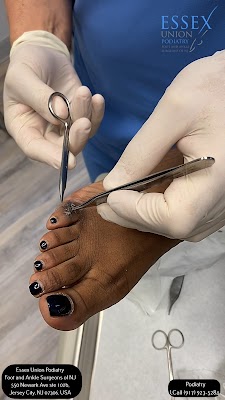
On examination, I look for joint effusion, crepitus, and pinpoint tenderness along the joint line or tendon sheath. Provocative tests help localize the source, for example, plantarflexion‑inversion with anterolateral palpation for soft tissue impingement, resisted eversion for peroneal sheath pain, or a grind test at the big toe joint.
Imaging depends on the story. X rays are the starting line, not the finish. They rule out fractures, osteophytes, and alignment issues that can drive synovitis. Ultrasound, in trained hands, shows synovial hypertrophy and increased Doppler flow, and it helps distinguish joint fluid from tendon sheath fluid. It also lets a foot and ankle ultrasound guided surgeon place medication precisely. MRI shows the full map: synovial thickening, edema patterns, subtle osteochondral injuries, scar bands, and associated tendon pathology. If infection or crystals are on the table, an aspiration with cell count, Gram stain, culture, and crystal analysis provides clarity. A diagnostic local anesthetic injection, especially under ultrasound, can prove the pain generator when imaging is equivocal.
The aim of evaluation is not just to “see inflammation” but to answer why it exists and whether it is likely to respond to conservative care. That distinction guides whether I act as a foot and ankle pain doctor mapping rehab or a foot and ankle operative specialist planning a synovectomy.
First‑line care that actually moves the needle
Most synovitis improves without an operation if the cause is addressed early. My baseline plan runs 6 to 12 weeks and includes activity modification, mechanical support, targeted therapy, and often a guided injection.
For mechanical synovitis, unloading the offending arc helps. A short period in a removable walking boot can calm the ankle, but it should be brief to avoid stiffness. A midfoot strap or arch‑controlling orthosis reduces dorsal impingement at the foot and ankle surgeon Essex Union Podiatry, Foot and Ankle Surgeons of NJ big toe joint. Taping that corrects rearfoot alignment eases subtalar irritation. A foot and ankle care surgeon leans on a good physical therapist who builds motion where it is safe and control where it is missing. That often means restoring ankle dorsiflexion, training peroneal timing after sprain, and reconditioning calf and intrinsic foot strength.
Medication is simple. Short courses of NSAIDs reduce pain, but we watch stomach and renal risks. Topical anti‑inflammatories have modest effect and low risk. Ice helps symptomatically, heat does not.
Injections occupy a middle ground. Under ultrasound, I can see the needle enter the joint or tendon sheath, avoid nerves, and distribute a small dose of corticosteroid and local anesthetic precisely. For isolated tenosynovitis, the mechanical hydrodissection from fluid often frees adhesions. In athletes in season, this can buy a stable window to retrain mechanics. I discuss potential tendon weakening and limit corticosteroid around weightbearing tendons. For patients with inflammatory arthropathy, a rheumatologist partnership is invaluable, since medication control reduces surgical need and improves outcomes if surgery is needed.
Biologics get attention. Platelet‑rich plasma has some supportive data for tendinopathy and limited, mixed data for synovitis outside of arthritis. When I use it, I use it as an adjunct after a careful unloading and retraining plan, not as a stand‑alone cure. A foot and ankle PRP surgery doctor or a foot and ankle regenerative surgery specialist should be candid about expected gains and timelines. Stem cell language is often misused; in the ankle, so‑called stem cell injections are largely investigational. A foot and ankle stem cell surgery specialist should enroll appropriate patients in well‑designed protocols or avoid overpromising.
I expect meaningful change by the 6 week mark. If the only days that feel decent are the days after a numbing injection, or if the joint locks and the exam reveals palpable scar bands or impinging synovium, surgery becomes a rational option rather than a last resort.
When to involve a surgeon sooner
Some scenarios carry a high failure rate with rest alone, or they put the joint at risk if we wait too long.
- Recurrent anterolateral ankle impingement after multiple sprains with clear scar tissue on MRI that catches with motion Flexor hallucis longus tenosynovitis in dancers with triggering behind the ankle that does not respond to sheath injections Subtalar synovitis with interosseous scar that blocks inversion‑eversion and derails gait retraining Synovitis from osteophyte impingement where the spur continues to rub, such as dorsal first MTP spurs or anterior ankle spurs Rheumatoid synovitis causing erosive changes despite medical therapy
A foot and ankle surgical evaluation doctor will weigh patient goals, timelines, and comorbidities. A foot and ankle surgical second opinion can be helpful if you have tried two or three nonoperative measures without steady progress. My threshold is lower for athletes with short competitive windows, and higher for recreational patients who are improving, even slowly.
Surgical solutions, explained in plain terms
The word synovectomy covers several techniques. We remove inflamed lining and free scar bands that trap the joint or tendon, and we correct any mechanical driver that would make the inflammation recur. The hospital or surgery center visit is usually outpatient. A foot and ankle outpatient surgeon with a coordinated foot and ankle surgical team can perform most synovectomies with regional anesthesia and the patient home the same day.
Here are the main options I discuss, matched to problems:
- Arthroscopic ankle synovectomy and debridement. Through two to four portals, I visualize the joint, remove hypertrophic synovium, and release scar tissue. If there is a small anterior spur, I contour it with a burr. Arthroscopy is motion preserving, with small incisions and quicker rehab, and fits well for anterolateral soft tissue impingement and generalized synovitis without major bony conflict. Endoscopic or arthroscopic subtalar synovectomy. Using posterolateral portals, I access the subtalar joint, remove inflamed synovium in the posterior facet, and release interosseous scar bands. This is meticulous work near nerves and tendons, so it belongs with a foot and ankle endoscopic surgery specialist who performs it routinely. Tendon sheath synovectomy. For FHL tenosynovitis, I release the sheath behind the ankle through a small incision or endoscopically, clear villonodular synovium, and free triggering. For peroneals, I inspect for a split tear and repair if present, then recontour the retromalleolar groove if instability contributes. These are bread and butter cases for a foot and ankle tendon specialist and foot and ankle soft tissue surgeon. Exostectomy or bone spur removal. If synovitis is driven by a dorsal first MTP spur or anterior ankle spur, I remove the spur and any impinging soft tissue. A foot and ankle exostectomy surgeon or foot and ankle bone spur removal surgeon should pair this with synovial cleanup to address both friction and inflammation. Cartilage‑adjacent procedures. If synovitis coexists with a focal cartilage injury, I address both. For contained defects, microfracture stimulates a fibrocartilage fill. In select cases, particulated cartilage or osteochondral plugs may be considered. A foot and ankle microfracture surgeon or foot and ankle cartilage repair surgeon plans these as joint preservation, not symptom chasing.
A foot and ankle joint preservation surgeon favors approaches that protect motion and alignment. In the ankle, that often means staying arthroscopic unless deformity or massive osteophytes demand an open window. In tendons, that means sheath release rather than tendon sacrifice.
The nuts and bolts in the operating room
Small choices matter. Portal placement avoids superficial peroneal and saphenous nerves. Fluid pressure remains low enough to keep visualization clear while limiting extravasation that can increase pain. Synovium near cartilage is shaved with a guarded blade, not an aggressive burr. When I see inflamed plica or capsular folds that catch, I resect them completely. If I find a driver like an anterior tibial spur, I contour it flat to the native surface, not aggressively, to preserve stability.
In tendon cases, I identify the nidus. FHL often frays where it bends around the talus. I inspect the tendon under dynamic motion. Debridement removes frayed fibers sparingly and preserves strength. If I see a peroneus brevis split, I tubularize and repair it, and if the retinaculum is lax, I repair or deepen the groove. That changes recurrence risk more than any amount of steroid.
Adjuncts are case dependent. I rarely use radiofrequency coblation inside joints for synovium due to heat risk. I sometimes place a small volume of local anesthetic at the end for comfort, and I avoid intraarticular corticosteroid during cartilage work. Biologics may be layered into cartilage procedures, but I reserve them for select defects with informed discussion.
Recovery that respects biology and your calendar
Protocols vary with the procedure and the patient’s baseline. After straightforward arthroscopic synovectomy without cartilage work, I allow weightbearing in a boot as comfort allows within the first few days. Range of motion begins early, usually by day two, to prevent stiffness. Swelling control dictates the first two weeks: elevation above heart level, a snug but not constricting compressive wrap, and gentle ankle pumps.
If I performed microfracture or repaired a tendon, weightbearing may be limited for 2 to 6 weeks, and motion may be protected in a controlled arc. For FHL sheath release, I prioritize early great toe motion to prevent adhesions. For peroneal sheath work with retinacular repair, I protect eversion strength for a few weeks before progressive loading.
Therapy is targeted, not generic. We retrain the motion arc that previously impinged. Proprioception drills rebuild balance. Strength returns in a sequence that respects healing tissue. A foot and ankle post operative care surgeon coordinates this with a therapist who understands the procedure details.
Milestones vary, but many patients resume low impact cardio between weeks 2 and 4 after simple synovectomy, light jogging around week 6 to 8, and return to sport between weeks 8 and 12. With tendon repairs or cartilage work, add several weeks. I avoid absolute promises. Instead, I frame ranges and use function tests to clear higher loads.
Risks and how we control them
No operation is zero risk. Infection risk is low for arthroscopy, but not zero. Nerve irritation can cause numb patches that usually fade, though rarely persist. Stiffness is the most common complaint if motion is delayed. Deep vein thrombosis is uncommon in ankle arthroscopy, but higher in patients with prior clots, hormone therapy, or prolonged immobilization. I use a risk‑based DVT plan that can include early mobilization, calf pumps, and, for high‑risk patients, medication.
Recurrence hinges on whether we removed the driver. If a spur remains, synovitis can return. If mechanics downstream are unaddressed, such as cavovarus alignment that keeps pinching the anterolateral ankle, symptoms may smolder. A foot and ankle alignment correction surgeon or foot and ankle biomechanical surgery specialist might recommend a subtle osteotomy in rare, stubborn cases, but that is not the norm for synovitis alone.
For patients with inflammatory arthritis, synovitis can recur even after meticulous synovectomy. Collaboration with a rheumatologist and tight control of disease activity improve durability. For gout, crystal control is crucial. I have seen flares evaporate once serum uric acid stays in target range.
A surgeon’s judgment on trade‑offs
The choice between another injection and a scope is not just about pain on the day of the visit. I look at the story arc. If you have had two well‑placed injections that gave only transient relief, and MRI shows thickened synovium and scar bands that match your symptoms, a third injection is less likely to change your trajectory. If you are three weeks from a championship meet with a first flare that just started, a well‑aimed injection and smart unloading can bridge you safely. I warn about needle‑heavy seasons that leave tendons fragile when the schedule calms down.
Open surgery is rare for pure synovitis but makes sense when osteophytes are bulky, or prior surgery left distorted planes. An open approach gives direct access but trades a longer scar and slightly slower early motion. A foot and ankle joint surgeon will discuss why your anatomy guides that choice.
Robotic assistance has little role in synovectomy. A foot and ankle modern techniques surgeon relies more on endoscopic visualization and ultrasound guidance than on robotics for this problem. What matters more is volume and pattern recognition. A fellowship trained foot and ankle surgical expert who performs these procedures weekly brings smoother execution and quicker, safer decisions when anatomy varies.
A quick case that illustrates the path
A 28‑year‑old outside back rolled her ankle twice in preseason. She finished the schedule but needed ice after every practice. By the off‑season, she could not cut without a jab of pain on the front‑outer ankle and a sense of catching. Exam showed tenderness at the anterolateral gutter and a small effusion. X rays were clean. Ultrasound showed hypertrophic synovium there with hyperemia. An ultrasound‑guided injection cleared pain for only six days. MRI revealed an anterolateral scar band tethered to the capsule.
We discussed options. She wanted a dependable runway into next season. We performed an outpatient arthroscopic synovectomy and soft tissue impingement debridement. Intraoperatively I removed the scar band and thickened synovium, and smoothed a minimal tibial lip. She bore weight in a boot day two, cycled by week two, jogged on week six, and was scrimmaging without symptoms by week ten. The key was not simply cleaning tissue, but teaching her peroneals and hip control to protect the front‑outer ankle and avoiding the return of the pinch.
Special groups and nuances
Dancers demand plantarflexion. For FHL tenosynovitis, a foot and ankle procedure specialist uses a sheath‑sparing technique and early toe motion. I warn about temporary weakness en pointe and plan return to full barre over weeks, not days.
Rheumatoid patients benefit from earlier synovectomy when erosions appear on imaging despite medication. A foot and ankle rheumatoid surgery specialist coordinates surgery around DMARD schedules to keep infection risk low and disease control high. Their incisions look the same as any other patient’s, but their tissue response informs how long we protect motion.
Gout can mimic infection. A foot and ankle gout surgery doctor should aspirate crystals when the diagnosis is uncertain and avoid surgery during an acute crystal storm unless infection is in play. If synovial hypertrophy and tophaceous deposits persist and mechanically block motion, a targeted debridement can relieve the jam. Long term, urate control is the hero.
Older patients heal, but swelling lingers longer. A foot and ankle geriatric surgery specialist plans more edema control and watches skin closely. Younger athletes push faster. A foot and ankle pediatric surgery specialist rarely operates for synovitis alone outside of specific conditions, but when tenosynovitis ties to coalition or alignment issues, addressing the root cause matters more than chasing the inflamed lining.
Planning, transparency, and outcomes
Before any operation, I walk through goals, alternatives, and likely timelines. A foot and ankle surgical planning specialist will map incisions, discuss anesthesia, review imaging with you, and outline what the first two weeks look like. Recovery hinges on preparation: home setup, work adjustments, and a therapist who knows the plan. A foot and ankle surgical risk assessment specialist will flag smoking, diabetes control, or vascular disease that change complication odds and suggest prehabilitation to tilt the field in your favor.
Most synovectomy patients report a clear reduction in catching pain and swelling within weeks. Full quieting of the joint or sheath takes time. We track outcomes by function, not only pain scores. Can you do a single‑leg squat without a pinch? Can you run figure eights? A foot and ankle surgical outcomes specialist uses these checkpoints to pace return. If you stall, I look for missed drivers: calf tightness that re‑pinches anterior ankle, a missed small spur at the first MTP, or a peroneal split that was not visible preoperatively and needs attention.
For the rare patient who does not improve, we revisit the diagnosis. Nerve entrapment can coexist, especially superficial peroneal neuritis after sprain. A foot and ankle nerve entrapment surgeon may add a small decompression. If infection is suspected, a foot and ankle infection surgery specialist manages debridement and antibiotics. Prior hardware near the joint can cause synovitis; a foot and ankle hardware removal surgeon may elect to remove prominent implants once healing is solid.
Practical steps if you think you have synovitis
- Track patterns for two weeks. Note which motions hurt, how swelling behaves, and what calms it. Try targeted unloading. A lace‑up brace for the ankle, a metatarsal pad for the big toe joint, or a brief walking boot can reduce irritation. Begin gentle motion drills. Ankle alphabets, towel curls, and calf stretching that respects pain are better than strict rest. Seek an evaluation if swelling or catching persists past a month, if night pain wakes you, or if you suspect infection. Ask for image‑guided diagnostics. An ultrasound‑guided injection can clarify the source and sometimes fix the problem.
A foot and ankle clinic surgeon who sees this daily will separate a transient irritable joint from a scar‑trapped one. If surgery is advised, it is usually outpatient, motion preserving, and focused on clearing the problem you can feel with each step.
The bottom line from a surgeon who treats this every week
Synovitis in the foot and ankle is common, fixable, and nuanced. The right solution starts with clarity about why the synovium is inflamed. Conservative measures work when they remove the driver and restore control. When they do not, a small, well‑aimed operation by a foot and ankle operative specialist can unlock motion and stop the cycle. The craft lies in choosing the least invasive procedure that addresses the true cause, then guiding recovery so the joint learns to move without the pinch that started it all.
If you are weighing paths, it is reasonable to ask for a foot and ankle surgical referral specialist to review your imaging and exam, especially before a third injection or a second season on the sideline. Whether you meet me as a foot and ankle medical surgeon at the hospital, a foot and ankle outpatient surgeon in clinic, or a foot and ankle surgical consultant for a second opinion, the goal is the same, to match you with a plan that respects your anatomy, your sport or work, and your timeline, and to deliver foot and ankle surgical solutions that are precise rather than aggressive.